The Book of the Dead Explained: Judgment and the Weighing of the Heart
The Egyptian Book of the Dead explained: what it is, the weighing of the heart, the judgment before Osiris, the goddess Maat and the path to the afterlife.
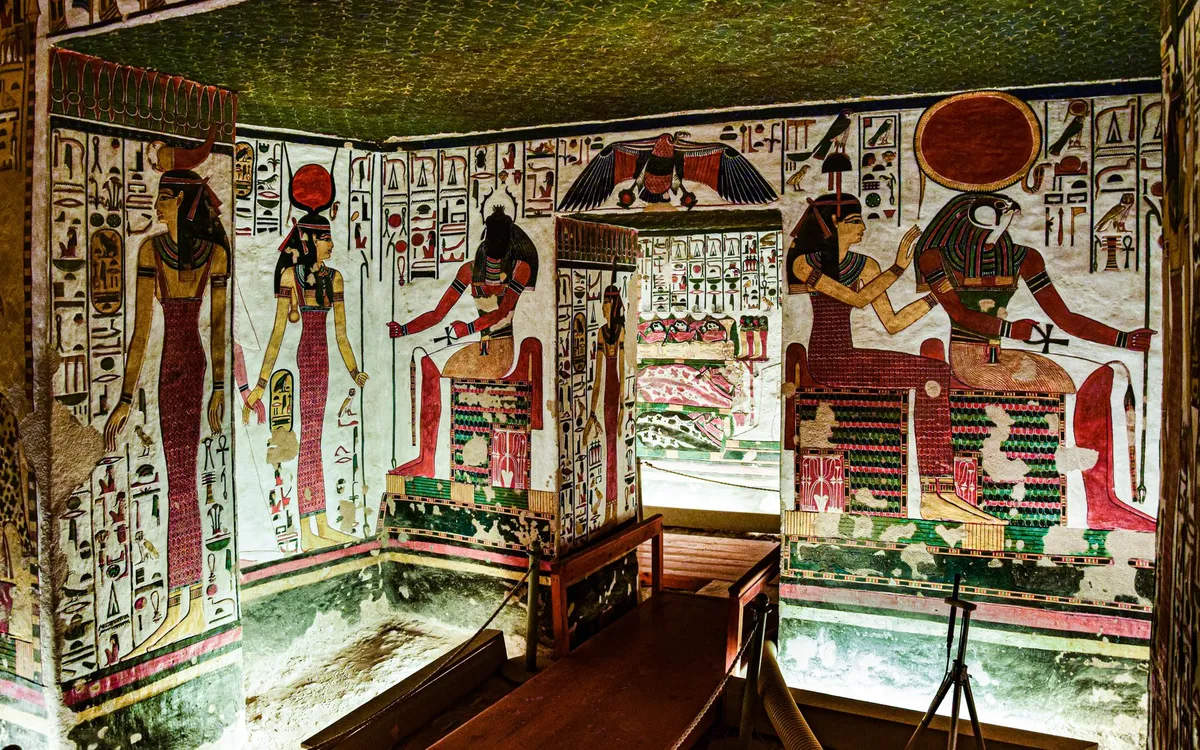
The “Book of the Dead” is one of the most evocative phrases in all of ancient Egypt, conjuring images of spells, gods, and the perilous journey beyond death. But what was it really, and what did it mean to the Egyptians who commissioned it?
Far from a single book, it was a collection of spells designed to guide and protect the deceased through the dangers of the underworld. At its dramatic heart lies the judgment of the soul, including the famous weighing of the heart.
What the Book of the Dead Actually Was
The Egyptian title is often translated as the “Book of Coming Forth by Day.” It was not a fixed scripture like a modern religious text, but a flexible collection of spells, hymns, and instructions, often written on papyrus and placed in the tomb with the deceased.
These texts evolved over centuries from earlier funerary writings, including the Pyramid Texts carved in royal tombs and the Coffin Texts painted on coffins. Wealthier individuals could commission longer, beautifully illustrated scrolls, while others made do with shorter versions.
Tip: No two Books of the Dead are identical. Scribes selected and arranged spells to suit the owner, so each surviving papyrus is a unique personalized object.
The Journey Through the Underworld
The spells were practical tools for the afterlife. They were meant to help the deceased overcome obstacles, repel demons and dangerous creatures, transform into different forms, and navigate the perilous landscape of the Duat, the Egyptian underworld.
Some spells provided passwords to pass guardians at various gates. Others ensured the deceased would not have to perform manual labor in the afterlife, or protected the heart from testifying against its owner. The ultimate goal was to reach the Field of Reeds, an idealized version of Egypt where the blessed dead lived on.
The Weighing of the Heart
The most famous scene from the Book of the Dead is the judgment, often illustrated in vivid detail. The deceased is led into the Hall of Two Truths, where the heart is placed on a great scale.
Here is what the scene depicts:
- The heart of the deceased rests on one pan of the scales.
- On the other pan sits the feather of Maat, the goddess of truth, justice, and cosmic order.
- Anubis, the jackal-headed god, carefully adjusts the balance.
- Thoth, the ibis-headed scribe of the gods, records the verdict.
- Nearby waits Ammit, a fearsome creature part crocodile, lion, and hippopotamus.
If the heart balanced against the feather, the deceased was judged truthful and worthy, and could pass on to eternal life. If the heart was heavy with wrongdoing, Ammit, the “devourer,” consumed it, and the soul was annihilated, a far more frightening fate than any punishment.
| Element | Role in the judgment |
|---|---|
| Heart | The record of a person’s deeds and character |
| Feather of Maat | The standard of truth and justice |
| Anubis | Oversees the weighing |
| Thoth | Records the verdict |
| Osiris | Presides as judge of the dead |
| Ammit | Devours the unworthy heart |
Maat and the Egyptian Idea of Justice
Behind this entire drama stands Maat, the principle of truth, balance, and cosmic order that the Egyptians valued above almost all else. To “live by Maat” meant to act justly, honestly, and in harmony with the order of the universe. The judgment was, in effect, a final accounting of whether one had done so.
Before the scales, the deceased recited the “Negative Confession,” declaring innocence of a long list of sins, such as theft, lying, and causing harm. This vision of moral judgment after death is one of ancient Egypt’s most striking contributions to the history of religious thought.
To see exquisite painted versions of these scenes, you can visit Egypt’s museums and the decorated tombs of the Valley of the Kings, where the gods of judgment look down from the walls. You can plan your trip to walk among them.
Conclusion
The Book of the Dead was a deeply human response to the universal fear of death, a carefully prepared guide to help loved ones reach eternity. Through the weighing of the heart and the principle of Maat, it reveals a civilization that linked the afterlife not just to ritual, but to a life lived with truth and justice. Few ideas from the ancient world still resonate so powerfully today.
Some links on EgyptInterActive are affiliate links: if you book through them we may earn a commission, at no extra cost to you. It never changes our recommendations.
Keep reading
The Curse of the Pharaohs: Fact, Fiction and the Real Story
Did a deadly curse strike those who opened Tutankhamun's tomb? Separating the legend of the pharaohs' curse from the facts.
How Mummies Were Made: Mummification Step by Step
From removing the brain to seventy days in natron salt, discover how the ancient Egyptians turned the dead into eternal mummies.
Cleopatra VII: Separating the Facts from the Myths
Brilliant ruler or seductress of legend? Discover the real Cleopatra VII behind two thousand years of myth.