Edfu Temple Guide: Egypt's Best-Preserved Temple of Horus
Edfu Temple guide: visit Egypt's best-preserved temple, dedicated to Horus. What to see, tickets, the calèche ride, opening times and Nile cruise tips.
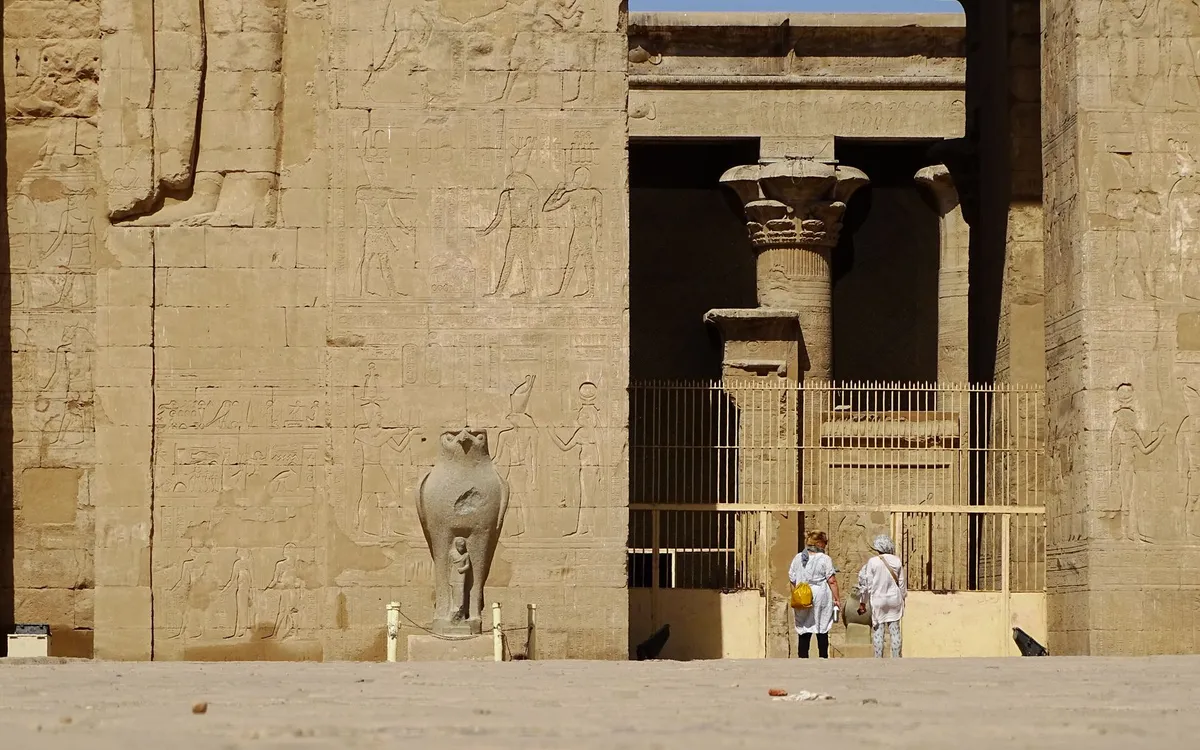
Of all Egypt’s temples, none gives you a clearer picture of what these sacred places once looked like than the Temple of Edfu. Its towering walls, intact roof and shadowy inner chambers survived almost whole, making it the best-preserved temple in the country. For Nile cruisers sailing between Luxor and Aswan, it is an unmissable stop.
What Edfu is and why it matters
The Temple of Edfu is dedicated to Horus, the falcon-headed sky god, and stands in the town of Edfu on the west bank of the Nile. Unlike most Egyptian temples, it was not built by the pharaohs of the great dynasties but during the Ptolemaic period, the Greek line of rulers descended from one of Alexander the Great’s generals. Construction spanned roughly two centuries and finished in the first century BCE.
That comparatively late date is exactly why it survives so well. For centuries the temple lay buried beneath desert sand and the houses of the growing town, which protected it from the elements until it was excavated in the nineteenth century. What you walk through today is remarkably close to what its priests knew.
What you will see
You approach through a colossal pylon — a pair of towering gateway walls carved with scenes of the king smiting his enemies before the gods. Beyond it lies an open courtyard ringed with columns, then the hypostyle halls grow progressively darker and more sacred as you move inward toward the sanctuary.
Highlights worth seeking out include:
- The granite falcon statues of Horus that guard the entrance — one of the most photographed images in Egypt.
- The pylon reliefs, among the largest and best-preserved temple carvings anywhere in the country.
- The inner sanctuary, which still contains a polished granite shrine that once held the god’s sacred image.
- The “Temple of the Falcon” wall texts, detailed inscriptions describing rituals, festivals and the temple’s own mythology.
- The Nilometer and side chapels, quieter corners that reward unhurried explorers.
Tip: bring a small torch or use your phone light in the inner chambers. The sanctuary and side rooms are deliberately dark, and a little extra light reveals reliefs most visitors walk straight past.
Tickets, opening times and what to expect
Edfu is an official antiquities site with a ticket office at the entrance. Rather than rely on figures that change, buy your ticket on arrival at the gate or let your cruise or tour operator arrange entry as part of the excursion. Most Nile cruise packages include the visit, and a licensed Egyptologist guide typically leads the group.
Opening hours run through the day, with longer hours in the warmer months. Because the temple is a fixed cruise stop, the busiest window is mid-morning when several boats dock at once — an early or later slot is calmer if your schedule allows.
Getting there and how long to spend
Edfu sits roughly halfway between Luxor and Aswan, and for most travellers it is reached as a Nile cruise stop rather than an independent day trip. From the riverside dock, the classic way to reach the temple is by horse-drawn carriage (calèche), a short and memorable ride through the town.
| Detail | What to know |
|---|---|
| Typical visit length | 1.5 to 2 hours |
| Usual arrival | By Nile cruise between Luxor and Aswan |
| Dock to temple | Short horse-drawn carriage ride |
| Best paired with | Kom Ombo, the next cruise stop upstream |
If you are travelling independently rather than by cruise, Edfu can be combined with Kom Ombo as a long day from Aswan or Luxor by private car. See our plan your trip page for help fitting the southern temples into a Nile itinerary.
Best time to visit and practical tips
The cooler months from autumn to early spring are by far the most comfortable for visiting Upper Egypt, where summer heat is intense. Early morning offers the softest light and the smallest crowds.
A few practical notes: agree the calèche fare clearly before you set off, carry small change for tips, and wear a hat and sunscreen since the courtyard is exposed. A guide adds enormous value here, as the wall texts are a complete record of temple life and far richer than they first appear.
Give Edfu around two hours, take your time in the cool inner halls, and you will leave with the rare sense of having seen an Egyptian temple as its builders intended.
Edfu Temple Guide: Egypt's Best-Preserved Temple of Horus
Skip the queues and secure your spot — book your tickets and tours through our trusted partner Tiqets.
Check tickets on TiqetsTickets & activities in Luxor
Some links on EgyptInterActive are affiliate links: if you book through them we may earn a commission, at no extra cost to you. It never changes our recommendations.
Keep reading
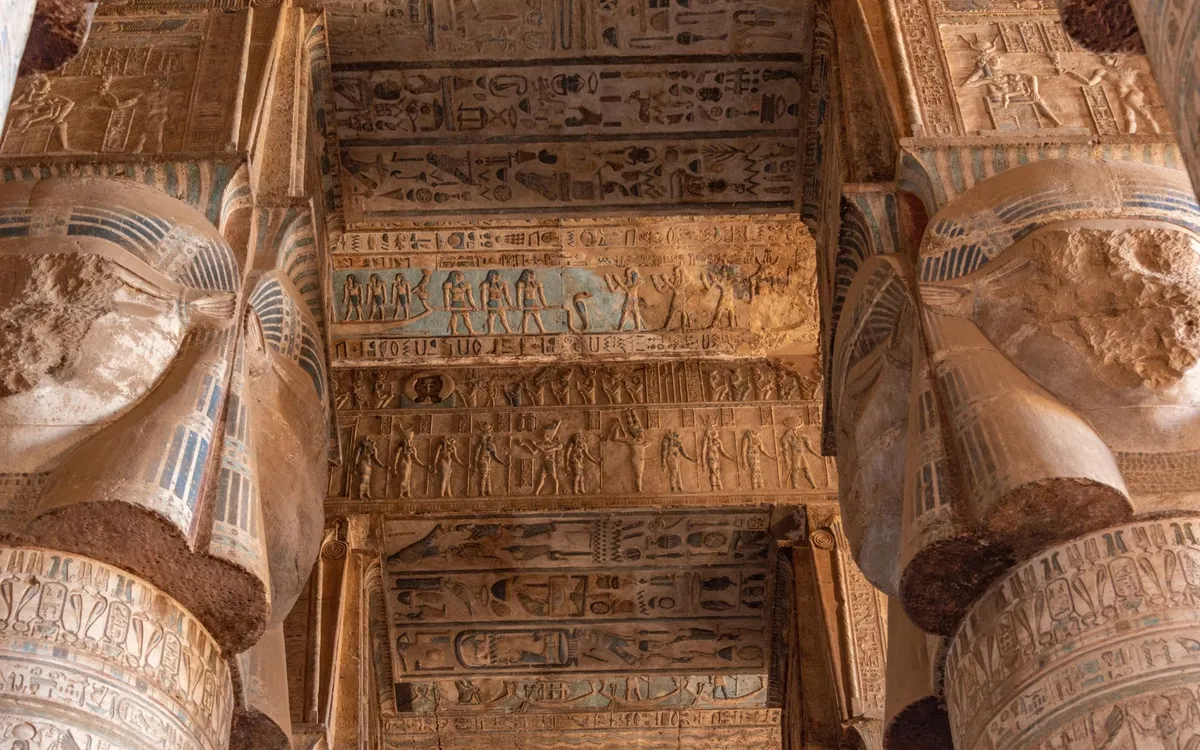
Dendera Temple Guide: Hathor's Temple and Its Painted Ceiling
Dendera dazzles with restored colour and a star-painted ceiling — one of Egypt's most complete temples, dedicated to the goddess Hathor.
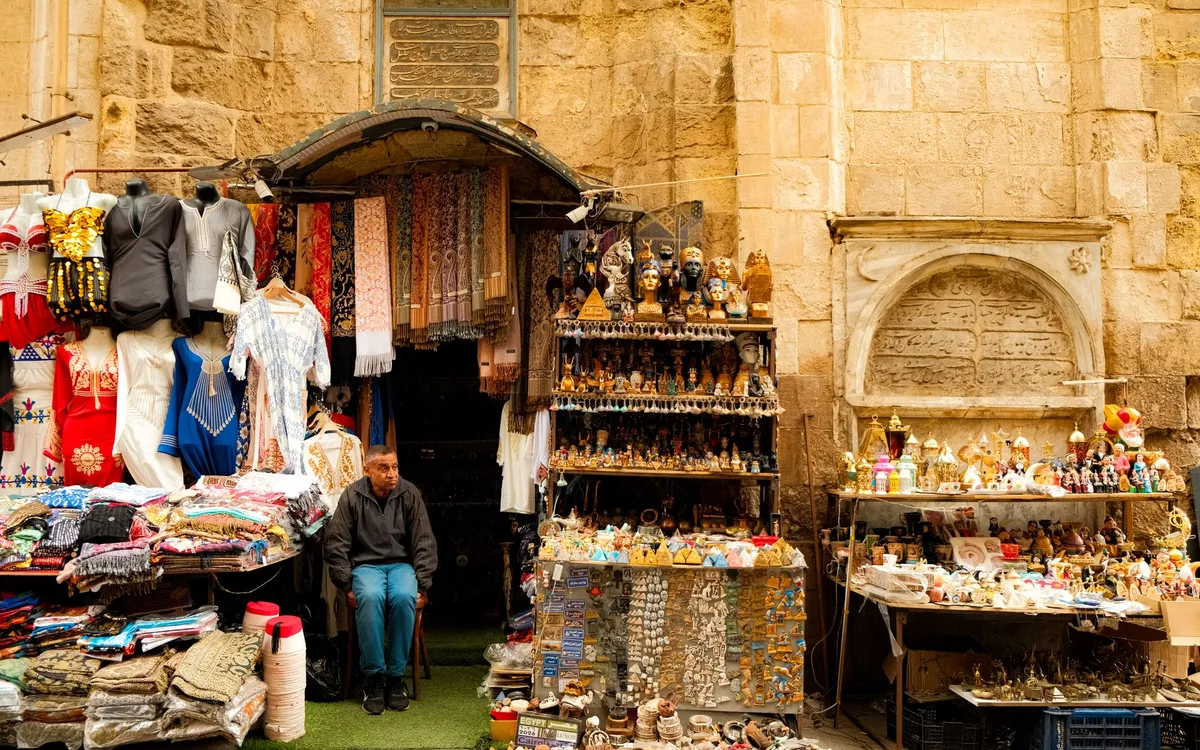
Khan el-Khalili Guide: Cairo's Historic Bazaar and How to Visit
Khan el-Khalili is Cairo's great medieval bazaar — a labyrinth of lantern-lit alleys, craftsmen, spice stalls and the legendary El Fishawy café.
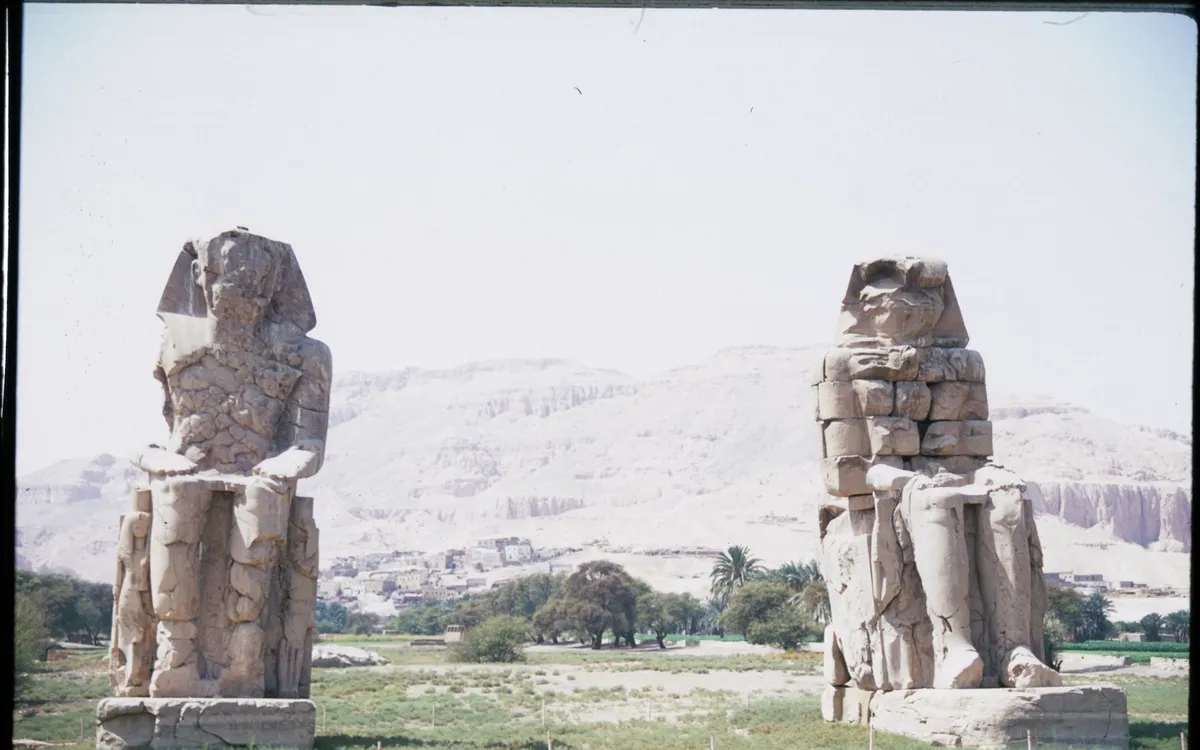
Colossi of Memnon Guide: Luxor's Twin Giants on the West Bank
Two colossal statues of Amenhotep III guard the road to Luxor's West Bank — a free, dramatic first stop on any tombs-and-temples day.