Abu Simbel Sun Festival: The Solar Alignment Explained
What the Abu Simbel Sun Festival is, how the solar alignment lights up Ramesses II's sanctuary twice a year, and practical tips for attending the spectacle.
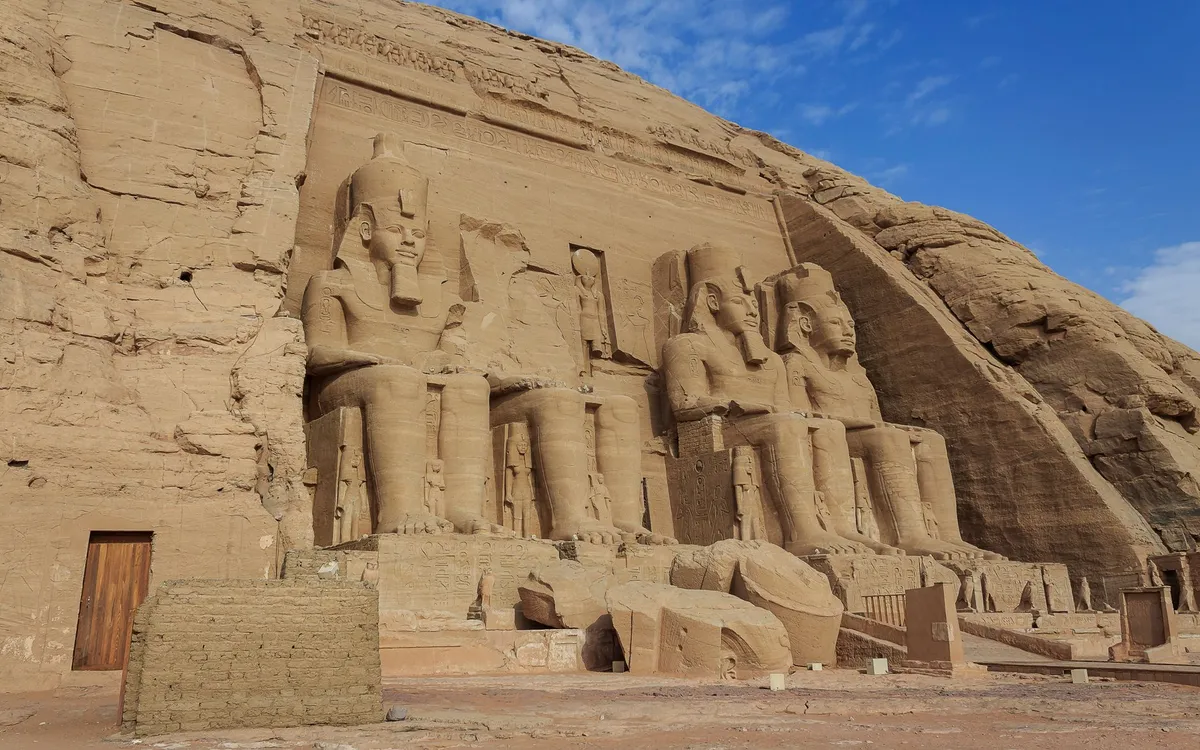
Twice a year, at dawn, a beam of sunlight travels roughly sixty metres into the heart of the Great Temple of Abu Simbel and lights up the statues in its innermost sanctuary. The Abu Simbel Sun Festival celebrates this ancient feat of solar engineering, and it remains one of Egypt’s most extraordinary things to witness.
What actually happens
The Great Temple was built for Pharaoh Ramesses II in the 13th century BCE, carved straight into a sandstone cliff in what is now far southern Egypt, near the Sudanese border. At the very back sits a small sanctuary with four seated statues: the gods Ptah, Amun-Ra and Ra-Horakhty, alongside the deified Ramesses II himself.
On the alignment mornings, the rising sun shines directly down the temple’s main axis and reaches the back wall, illuminating three of the four figures. The statue of Ptah, a god associated with the underworld and darkness, traditionally remains in shadow — a detail often cited as deliberate, reflecting his chthonic nature. The whole illumination lasts only around twenty minutes.
Tip: Arrive well before sunrise. The beam reaches the sanctuary in the early morning, and the crowd builds quickly — the closer your spot, the better your view of the moment the light lands.
When the alignment happens
The Sun Festival takes place twice a year, traditionally said to fall around 22 February and 22 October. These dates are popularly linked to the king’s birthday and his coronation, though that association is a tradition rather than a firmly proven historical fact.
A few important points to keep in mind:
- The exact dates can shift by a day depending on the year and the source, so always confirm the precise date for the year you plan to travel.
- When the temples were relocated in the 1960s to save them from the rising waters of Lake Nasser, the alignment shifted slightly — many accounts say by about a day compared with the original setup.
- Both February and October draw crowds, with October often considered the more comfortable season for the desert climate.
| Detail | What to know |
|---|---|
| Frequency | Twice a year |
| Approximate dates | Around 22 February and 22 October (verify the year) |
| Best arrival | Before dawn |
| Duration of illumination | Roughly 20 minutes |
| Built for | Ramesses II |
Why it still amazes
Whether or not the dates tie neatly to Ramesses’ life, the engineering is what stuns visitors. More than three thousand years ago, builders aligned a vast rock-cut temple precisely enough that sunlight would reach a specific point deep inside on chosen mornings. That the alignment still works today — even after the temples were cut apart and rebuilt on higher ground — makes the spectacle feel almost miraculous.
The festival atmosphere adds to it. On alignment mornings the site fills with travellers, music, dancing and local performers, turning a quiet desert temple into a celebration that lasts well past sunrise.
How to attend
Abu Simbel sits about 280 kilometres south of Aswan, deep in the desert near Lake Nasser. Most visitors reach it in one of two ways:
- By road from Aswan — a long but scenic desert drive, often starting in the very early hours to arrive before dawn.
- By short flight — a quick hop from Aswan (or sometimes Cairo), the most comfortable option, especially on festival days.
Practical advice for the festival:
- Book transport and accommodation well in advance — festival mornings are among the busiest of the year.
- Consider staying overnight in Abu Simbel village so you can reach the temple before sunrise without a punishing pre-dawn drive.
- Dress for cold desert mornings and strong daytime sun, and bring water.
- Confirm the exact alignment date and opening times for your year through an official or reputable source before locking in plans.
If you only see one rare event in Egypt, this is a strong candidate — a sunrise, a beam of light and three-thousand-year-old gods emerging from the dark.
Ready to build a southern Egypt trip around it? Our Plan Your Trip guide helps you combine Abu Simbel with Aswan, the Nile and Luxor into one unforgettable route.
Some links on EgyptInterActive are affiliate links: if you book through them we may earn a commission, at no extra cost to you. It never changes our recommendations.
Keep reading
Egyptian Arabic Phrases: A Traveller's Survival Guide
The Egyptian Arabic words and phrases that open doors — greetings, thanks, polite refusals and friendly bargaining, with easy pronunciation.

Egyptian Food: 14 Dishes You Have to Try (and Where to Eat Them)
From koshari to molokhia and basbousa — the essential Egyptian dishes to seek out, and the kinds of places where they taste best.